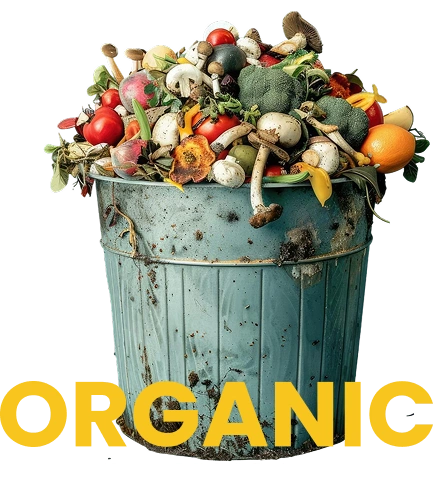
Turn Your Waste into Wealth with Organic Waste Converters!
Are you fed up with overflowing garbage bins and exorbitant waste disposal charges in your JP Nagar flat? Are you curious about whether it is worth investing in an organic waste converter? What is the actual cost of installing an OWC system in your housing society? If such questions have been haunting you, you are not alone. As BBMP's stringent regulations on wet waste segregation and growing environmental consciousness catch up with JP Nagar, hundreds of residents are looking to organic waste converters as the eco-friendly solution. But the biggest hurdle? Getting an accurate, end-to-end cost—not only the machine cost, but also all the concealed charges from installation to long-term maintenance.
In order to help you make an informed choice that strikes a balance between sustainability and your budget, this guide breaks down every rupee you'll spend on an organic waste converter in JP Nagar. Regardless of whether you oversee a commercial kitchen, a large gated community, or a small apartment complex, knowing these 12 cost factors will help you select the best waste management system for your requirements and prevent unforeseen costs.
12 Cost Factors You Must Consider Before Buying an OWC in JP Nagar
In order to prevent budget overruns and guarantee optimal system performance, it is crucial to take into account a number of cost factors when purchasing an organic waste converter in JP Nagar. Machine capacity, installation, electrical setup, BBMP compliance, maintenance, consumables, automation, and ROI analysis are all included in these 12 factors. Assessing these factors enables you to make an informed, economical, and sustainable investment that is suited to the particular waste management requirements of your company or community.
Continue reading about How Organic Waste Converters Can Reduce Your Apartment’s Monthly Waste Bill with this link
1. Machine Capacity and Daily Waste Processing Needs
Organic waste converter costs vary largely with your volume of waste every day. JP Nagar's residential scenario ranges from standalone houses to high-rise apartments. complexes—calls for varied capacity solutions. A small family producing 10-25 kg of food waste per day would need an entirely different system from a 200-apartment complex generating 300 kg per day.
Costing by capacity:
Small Capacity (25-100 kg/day): ₹1,50,000 - ₹2,75,000
Medium Capacity (100-300 kg/day): ₹3,40,000 - ₹6,25,000
Large Capacity (300-1000+ kg/day): ₹9,10,000 - ₹24,00,000
The OWC-500 for large communities costs ₹11,00,000 for processing 1,500–3,000 kg per day, while the ORCO Mini, ideal for small apartments in JP Nagar, starts at ₹1,50,000 for 75 kg per day. The first step in avoiding underinvesting in inadequate systems or overspending on superfluous capacity is understanding your waste generation patterns.
2. Installation and Civil Work Requirements
Beyond the machine price, installation charges can drive up your investment by ₹60,000 to ₹1,60,000. JP Nagar's older apartment complexes tend to need extensive basement redesign, whereas newer buildings might incorporate predefined trash management areas that minimize civil work requirements.
Installation cost elements are:
Floor strengthening and waterproofing: ₹20,000 - ₹50,000
Integration of drainage system: ₹15,000 - ₹35,000
Foundation for heavy machinery: ₹10,000 - ₹30,000
Transportation and setting: ₹5,000 - ₹15,000
Nagar organic waste converter suppliers provide turnkey solutions that package the installation along with the machine purchase, which can cost 10-15% less than engaging independent contractors.
3. Electrical Setup and Power Consumption Costs
Electrical infrastructure is a necessary but usually disregarded expense. Automatic composting machines require dedicated power lines with proper earthing and circuit protection. The initial electrical setup costs can vary from ₹15,000 to ₹30,000, depending on the machine's power requirements and the distance from your main electrical panel.
The amount of electricity used each month varies greatly:
Small OWCs (2.5-4 HP): ₹800 - ₹1,200 per month
Medium OWCs (7–10 HP): ₹1,500–₹2,000 per month
Large OWCs (13.5–16 HP): ₹2,200 - ₹2,500 per month
Depending on Bangalore's electricity rates, a medium-capacity organic waste converter for apartments typically increases your utility bills by ₹18,000 to ₹24,000 annually. However, this is far less than the ₹36,000 to ₹96,000 you would spend annually on commercial waste disposal services.
4. BBMP Compliance and Documentation Fees
In JP Nagar, which is governed by the BBMP's South Zone, waste segregation laws are rigorously enforced. A facility is deemed a bulk waste generator if it generates more than 50 kg of waste per day; the BBMP must approve its waste management system.
Compliance costs are:
BBMP registration and approval: ₹5,000 - ₹10,000
Environmental clearance consultation: ₹3,000 - ₹8,000
Annual renewal charges: ₹2,000 - ₹5,000
Documentation assistance from suppliers: ₹5,000 - ₹15,000
With the proper BBMP approval, your society is protected from fines for non-compliance that can reach ₹50,000 or more, despite the fact that these might seem like administrative hassles. Most reliable JP Nagar organic waste converter suppliers with BBMP approval handle this paperwork as part of their service package.
Continue reading about BBMP Waste Management Rules 2025: How an OWC Helps You Stay Compliant with this link
5. Maintenance and Annual Service Contracts
OWC maintenance is one of Bangalore's largest ongoing expenses. Although initial enthusiasm drives OWC adoption, poor maintenance causes 40% of residential systems to fail within two years. Annual Maintenance Contracts (AMC) ensure longevity and dependable performance.
Pricing structure of AMC:
Small capacity systems: ₹25,000 - ₹40,000/annum
Medium capacity systems: ₹40,000 - ₹75,000/annum
Large capacity systems: ₹75,000 - ₹150,000/annum
Reputable JP Nagar organic waste converter suppliers typically include performance optimization, emergency breakdown assistance, spare part replacement, and quarterly preventive maintenance in their comprehensive AMCs. Certain suppliers offer multi-year contracts at discounted rates that reduce yearly expenses by 15% to 20%.
6. Microbial Culture and Consumable Costs
To speed up decomposition, biodegradable waste converters depend on particular microbial cultures. Many first-time purchasers fail to consider the ongoing operational cost of replenishing these biological agents.
Monthly expenses for consumables:
Cost of microbial activators: ₹500 to ₹1,500 per month
Agents for balancing pH: ₹200 to ₹400 per month
Materials for carbon additives: ₹300 to ₹600 per month
Odor neutralizers: between ₹200 and ₹500 per month
You should budget between ₹15,000 and ₹35,000 per year for consumables for a standard medium-capacity apartment composting system. Nonetheless, these expenses can be lowered by up to 30% with appropriate waste segregation and balanced green-brown matter ratios.
7. Brand Reputation and Warranty Coverage
Brands of organic waste converters vary widely in price, with luxury manufacturers charging 20–40% more than less well-known alternatives. However, well-known brands offer superior construction quality, long warranties, and trustworthy after-sale support, all of which contribute to the higher cost being justified.
Pricing for brand tiers:
Premium brands (5-7 year warranty): ₹4,50,000 - ₹12,00,000
Mid-tier brands (3-5 year warranty): ₹3,00,000 - ₹8,00,000
Budget brands (1-2 year warranty): ₹1,50,000 - ₹4,50,000
According to JP Nagar residents, investing in high-quality brands reduces long-term maintenance expenses by 40% and extends system lifespan from 7-8 years to 12-15 years. The initial premium is justified by higher resale value and fewer breakdowns.
8. Automation Level and Labor Requirements
Both the initial cost of an organic waste converter and continuing labor expenses are significantly impacted by the level of automation. Although fully automatic systems do not require specialized operators, they are 30–50% more expensive than semi-automatic alternatives.
Comparison of automation costs:
Manual systems: Lower machine cost (₹1,50,000 - ₹3,00,000) + High labor cost (₹8,000 - ₹12,000/month)
Semi-automatic: Moderate machine cost (₹3,00,000 - ₹6,00,000) + Moderate labor cost (₹4,000 - ₹8,000/month)
Fully automatic: Higher machine cost (₹5,00,000 - ₹15,00,000) + Minimal labor cost (₹0 - ₹3,000/month)
Despite requiring a larger initial investment, fully automated systems frequently prove more cost-effective over a 5-year period for JP Nagar's tech-savvy apartment complexes with high labor costs.
Continue reading about Best Facility Management Company in Bangalore with this link
9. Space Preparation and Ventilation Setup
Enough ventilation is necessary for the proper installation of a kitchen waste composting machine in order to avoid odor problems and guarantee effective aerobic decomposition. The cost of space preparation varies according to the current infrastructure in your building.
The cost of setting up ventilation includes:
Exhaust fan installation: ₹5,000 - ₹12,000
Ducting and air circulation systems: ₹8,000 - ₹20,000
Odor filtration units: ₹10,000 - ₹25,000
Dedicated composting room modifications: ₹15,000 - ₹40,000
Total ventilation costs: ₹38,000 - ₹97,000
These costs may seem high, but they are necessary to keep the space comfortable. The most common reason for OWC abandonment in residential settings is inadequate ventilation.
10. Training and Operational Support Costs
Without adequate operator training, even the best environmentally friendly waste converters malfunction. System success is determined by efficient waste segregation, loading protocols, and fundamental troubleshooting abilities.
Investment in training:
₹5,000 to ₹15,000 for initial operator training
Programs for resident awareness: ₹3,000 to ₹8,000
Regular refresher courses: between ₹2,000 and ₹5,000 per year
Signage and training materials: ₹2,000 to ₹5,000
By investing between ₹15,000 and ₹30,000 in extensive training programs, progressive JP Nagar apartment associations have reduced operational issues by 90% and improved the quality of their compost.
11. Spare Parts Availability and Replacement Costs
Budgeting for component wear and replacement is necessary when owning long-term organic waste processing equipment. The lifespan of heating elements, mixing paddles, and shredder blades is limited.
Typical replacement expenses:
Sets of shredder blades: ₹8,000 to ₹15,000 (every two to three years)
Components of the mixing mechanism: ₹5,000 to ₹12,000 (every 3–4 years)
Heating components: ₹3,000 to ₹8,000 every four to five years
Components of the control panel: ₹4,000 to ₹10,000 (depending on need)
Selecting JP Nagar organic waste converter suppliers with an extensive inventory of spare parts guarantees continuous waste processing and avoids expensive downtime.
Continue reading about 11 Effective Solutions for Food Waste with this link
12. ROI Timeline and Payback Period Calculation
Comprehending the return on investment aids in defending the high initial outlay. With an installation fee of ₹1,60,000 and a typical medium-capacity system costing ₹4,00,000, the total investment comes to ₹5,60,000.
Calculating monthly savings:
Elimination of waste disposal fees: ₹5,000 to ₹8,000
Value of compost production: ₹2,000 to ₹5,000
Avoiding BBMP penalties: ₹3,000 to ₹6,000
Savings total per month: ₹10,000 to ₹19,000.
After subtracting operating costs of ₹60,000 to ₹1,00,000 from annual savings of ₹1,20,000 to ₹2,28,000, the net annual benefit comes to ₹60,000 to ₹1,28,000. This results in a 4–9 year payback period, following which the system produces pure savings.
In addition to financial gains, environmental advantages include a 30–40% reduction in your carbon footprint and the removal of over 100 tons of waste from landfills over the system's lifetime.
Conclusion: Transform Your Waste Management Today!
The organic waste converter cost in JP Nagar extends far beyond the sticker price. By factoring in all 12 elements—from machine capacity and installation to maintenance and ROI—you can make a sound investment that suits your budget and green agenda. Be it a resident, member of an RWA, or facilities manager, selecting the appropriate waste management system converts trash into treasure while maintaining BBMP compliance and eco-friendliness.
Ready to move forward? Get quotes, site audits, and turnkey installation packages tailored to your specifications from BBMP-approved organic waste converter suppliers in JP Nagar.